Aipas Bike Review 2026: Are Aipas E-Bikes Actually Worth Buying?
-
September 01 , 2026
-
38
Quick Verdict: Aipas Bikes
| Our Assessment | |
| Overall Rating | 8.8/10 |
| Best For | Value-focused riders wanting powerful, feature-rich e-bikes for commuting, recreation and mixed terrain |
| Best Overall Value | Aipas M2 Pro |
| Best Upgrade | Aipas M2 Max |
| Best Step-Through | Aipas M1 Pro |
| Pros | Aggressive pricing, powerful motors, large batteries, high payload ratings, useful accessories, UL-certified models, impressive feature-per-dollar ratio |
| Cons | Some models are extremely heavy, advertised maximum range requires favorable conditions, entry-level components appear on cheaper models, unrestricted speeds can create legal/safety issues, short 14-day return window |
| Short Summary | Aipas isn't selling premium-bike refinement at bargain prices; it's selling an unusually large amount of motor, battery, suspension and utility equipment for the money. The M2 Pro is particularly impressive below $1,000, but its weight and mechanical brakes are meaningful compromises. The M2 Max fixes one of our biggest concerns with hydraulic braking and is the model we'd choose for riders prioritizing control. |
Aipas Bike Review: How Is It Offering This Much E-Bike for the Money?
Spend a few minutes shopping for an electric bike and you'll quickly discover that $1,000 doesn't normally buy everything.
You might get a decent commuter with a modest motor.
Or a basic fat-tire bike.
Or a folding model with enough range for short urban trips.
Then you encounter Aipas.
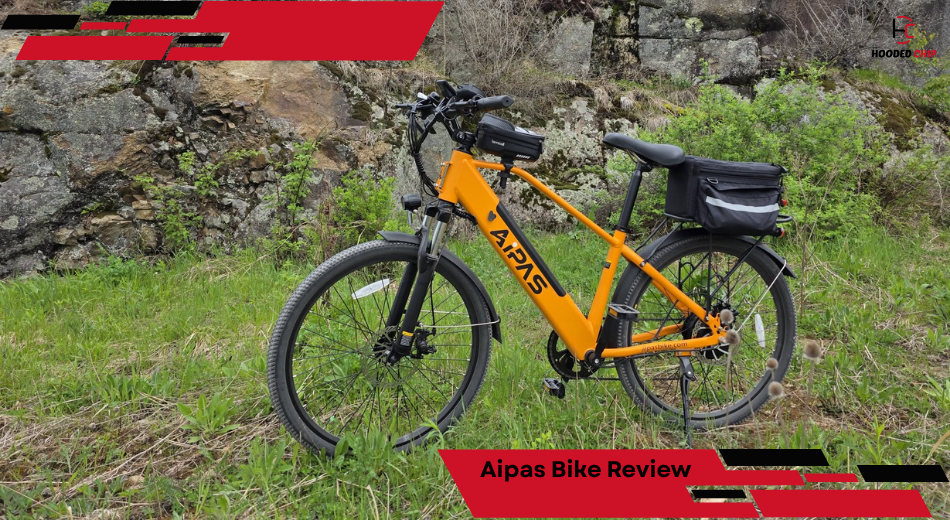
The current M2 Pro advertises a rear hub motor with up to 1,800W output, 110 Nm of torque, a 48V 17.5Ah battery, full suspension, 26 × 4-inch fat tires, a rear rack, fenders and up to 85 miles of pedal-assist range.
Its current price?
$899.
That specification-to-price ratio is enough to make a reasonable buyer suspicious.
Is Aipas cutting too many corners?
Are its 36 mph and 85-mile figures realistic?
Is Aipas a good e-bike company, or is this another direct-to-consumer brand with an impressive specification sheet and disappointing support?
Those are the questions worth answering.
For this Aipas Bike review, we examined the M2 Pro, M2 Max, M1 Pro and C-series models, current prices and policies, thousands of customer reviews and independent real-world testing.
The result is more nuanced than “cheap bike = good deal.”
But Aipas is much more interesting than its prices initially suggest.
Check Today's Price
What Is Aipas Bike?
Aipas is a direct-to-consumer electric-bike company focused primarily on affordable e-bikes for US riders.
Its range spans all-terrain fat-tire models, step-through bikes, commuters, folding e-bikes and utility-oriented options.
The company's strategy is fairly obvious once you browse its lineup:
Pack expensive-looking specifications into bikes priced substantially below many established premium competitors.
That means large batteries, high-output hub motors, racks, fenders, lighting and suspension frequently appear around or below the $1,000 mark.
Aipas also advertises UL certification on important models. The M2 Pro and M2 Max, for example, list UL 2849 certification, while their batteries are listed as UL 2271 certified.
That's an important trust and safety consideration in today's e-bike market.
Current buyer protections include a one-year limited warranty, a 14-day return-request window and fast US delivery that Aipas typically quotes around 3–8 days depending on the page.
Is Aipas Bike Legit?
Yes, Aipas Bike is a legitimate e-bike company.
The strongest evidence isn't its own marketing.
It's the scale of independent customer feedback.
As of September 1, 2026, Aipas has accumulated more than 4,100 reviews on Trustpilot, including roughly 2,700 submitted during the preceding 12 months.
Recent independent reviews include owners discussing specific models, shipping experiences, assembly, customer-support interactions and longer-term mileage rather than vague generic praise.
Independent specialist testing also exists.
Electric Bike Report put the M2 Pro through standardized speed, range, hill and braking tests rather than simply repeating the specification sheet. Their findings confirmed that the bike delivers substantial performance for its price while also exposing some compromises.
So legitimacy isn't our concern.
The bigger question is quality relative to price.
Aipas M2 Pro Review: The Model That Makes the Brand Interesting
If you're researching Aipas bike reviews, the M2 Pro is probably the model you've encountered most often.
And there's a reason.
At its current $899 sale price, the specification sheet is almost absurdly competitive.
Aipas lists:
| M2 Pro Specification | Claimed Figure |
|---|---|
| Motor | Up to 1,800W |
| Torque | 110 Nm |
| Battery | 48V 17.5Ah / 840Wh |
| Pedal-Assist Range | Up to 85 miles |
| Advertised Max Speed | 36+ mph unlocked |
| Payload | Up to 500 lb |
| Tires | 26 × 4 in |
| PAS | 5 levels |
| Certification | UL 2849 |
On paper, that's exceptional for less than $1,000.
But independent testing tells us much more.
The M2 Pro Really Is Powerful
Electric Bike Report tested the M2 Pro and found it fast and capable, including on hills.
The bike uses a 1,000W nominal rear hub motor rated at 1,800W peak and 110 Nm. Despite those numbers, its standardized hill-test results were approximately average among comparable fat-tire e-bikes.
That sounds disappointing until you consider one crucial factor:
The M2 Pro weighs approximately 94 lb.
It's a lot of bike.
Moving that much mass consumes some of the advantage provided by the larger motor.
In practical riding, however, the reviewer found climbing easy and described the motor as doing most of the work.
That's what matters for most buyers.
Range Is Good, But 85 Miles Needs Context
This is one of the most important findings in our Aipas M2 Pro review.
Aipas advertises 40–85 miles of pedal-assist range depending on conditions and assistance level. Its own PAS table reaches 85 miles at the lowest assistance level.
Independent testing produced:
23.2 miles in a high-power test.
74 miles in the low-power range test.
That's actually respectable.
But it demonstrates why shoppers shouldn't interpret “85-mile range” as meaning they'll casually ride 85 miles using lots of throttle and high assistance.
Rider weight, terrain, temperature, tire pressure, speed, hills and assistance level can dramatically alter range.
A recent customer similarly reported roughly 35–40 miles per charge while using PAS 3. That's one owner's experience, not a controlled test, but it's a useful real-world reference point.
Full Suspension Works
Comfort is another M2 Pro strength.
You get 26 × 4-inch fat tires, a front suspension fork and rear suspension.
Independent testing found the combination produced a comfortable, smooth ride, helped by the relaxed riding position and supportive saddle.
For rough roads, gravel, fire roads and recreational trails, this is a major advantage over rigid commuter bikes.
Don't confuse that with a high-end mountain-bike suspension system.
This is still a budget e-bike using relatively inexpensive components.
But for the money, the setup is impressive.
The M2 Pro's Biggest Weakness: Brakes
Here's where specification-sheet shopping can go wrong.
The M2 Pro is large.
It's heavy.
And when unrestricted, it's extremely fast for a bicycle.
Yet the tested M2 Pro uses mechanical disc brakes with 180mm rotors.
Electric Bike Report found its braking performance disappointing relative to the bike's weight and speed potential and specifically recommended that Aipas upgrade it to hydraulic brakes.
That's not a trivial criticism.
On a lightweight 20 mph commuter, basic mechanical brakes can be acceptable.
On a roughly 94 lb machine capable of approaching motorcycle-like urban speeds when unrestricted, we'd strongly prefer hydraulic brakes.
This brings us to the M2 Max.
Aipas M2 Max Review: The Upgrade We'd Seriously Consider
The Aipas M2 Max costs more—currently $1,099—but it directly addresses the M2 Pro's most obvious weakness.
The Max adds dual hydraulic brakes.
Aipas also upgrades the rear suspension to an adjustable air system rated up to 250 PSI.
The fundamental performance specification remains similar:
1,800W advertised motor output.
110 Nm.
48V 17.5Ah battery.
85-mile maximum claimed pedal-assist range.
36 mph advertised unlocked maximum.
500 lb payload rating.
26 × 4-inch tires.
Is the M2 Max Worth $200 More?
For us, yes—if you intend to use the bike's performance regularly.
Hydraulic brakes provide more than specification-sheet bragging rights.
They're particularly desirable on a heavy, powerful fat-tire e-bike.
The adjustable air suspension is another worthwhile refinement for riders covering rough terrain.
Aipas lists the M2 Max itself at around 90 lb, so this remains a very heavy bicycle.
You're not casually carrying it upstairs.
But as a powerful recreational or utility e-bike, the Max makes a convincing case.
Independent real-world reviewers have also highlighted its combination of commuting practicality, cargo capability and everyday usability.
Our pick: If $200 isn't a major stretch, we'd choose the M2 Max over the M2 Pro primarily for the braking upgrade.
Aipas M1 Pro Review: Easier Step-Through Access
The M1 Pro shares much of the M2 Pro's performance philosophy but changes the frame configuration.
Its step-through design makes mounting and dismounting easier.
That matters for shorter riders, older riders, commuters frequently stopping and starting, and anyone who simply doesn't want to swing a leg over a tall fat-tire frame.
The current M1 Pro is also listed at $899 and advertises the same 1,800W maximum motor figure and 110 Nm torque.
Aipas positions the M1 Pro as the easier-access alternative within its Xterrain family.
Recent independent customer feedback is encouraging. Owners have praised the M1's comfort, battery life, packaging and value, although those comments remain individual experiences rather than controlled tests.
For many riders, frame geometry matters more than another specification.
If you're deciding between M1 Pro and M2 Pro, we'd base the choice primarily on step-through versus step-over preference.
Aipas C1 Review and C2 Review: Better for Everyday Riding
Not everyone needs a 90-pound fat-tire machine capable of 36 mph.
That's where Aipas's C-series becomes more appealing.
The C1/C2 family is oriented more toward accessible everyday riding, cruising and commuting than aggressive all-terrain use.
Current Aipas bundles show C1 and C2 models priced substantially below the Xterrain Max models, with two-bike C1 and C2 packages starting around $1,348 during our research.
The upgraded C2 Max is designed as a premium urban commuter and fits riders approximately 5'2"–6'7", according to Aipas.
Recent Trustpilot feedback includes C1 Max owners praising ride comfort and relatively straightforward 45-minute assembly, while another C2 Max owner described the bike as responsive and smooth.
If your riding is mainly pavement, bike paths, neighborhoods and errands, don't automatically buy an M2 because its numbers are larger.
The lighter, more approachable C-series may make more sense.
First Impressions: Assembly Is Easier Than You Might Expect
Direct-to-consumer e-bikes arrive in boxes.
That inevitably makes first-time buyers nervous.
Fortunately, Aipas ships its bikes largely assembled.
Current product information describes bikes as approximately 90% pre-assembled, leaving tasks such as attaching or tightening the front wheel, seat, pedals and a few smaller components.
Real customers commonly report assembly times between roughly 30 and 45 minutes.
One recent M2 Pro buyer said assembly took about 40 minutes using Aipas's video tutorials. Another reported roughly 45 minutes for C1 Max bikes.
Packaging also receives repeated praise.
That's important on a nearly 100-pound bike where shipping damage can quickly become frustrating.
We'd still recommend having a bike shop perform a safety check if you're unfamiliar with bicycle assembly—especially brake adjustment, wheel security and drivetrain setup.
Aipas Performance in the Real World
Speed
The M2 Pro ships in a restricted Class 2 configuration with throttle and pedal assistance limited around 20 mph.
Aipas allows higher-speed operation through unrestricted settings, and the bike can reach approximately 36 mph or more under suitable conditions.
Here's the critical part:
Unlocking a bike doesn't automatically make that speed legal everywhere.
E-bike laws differ by state, municipality, road and trail.
A machine operating above normal Class 1/2/3 limits may no longer legally qualify as an e-bike in some jurisdictions.
Check your local regulations before changing speed settings.
Comfort
Comfort is a major strength across the fat-tire models.
The combination of large-volume tires, suspension and upright-to-relaxed geometry isolates riders from rough pavement much better than a rigid city bike.
Recent owners repeatedly mention comfort as a positive.
Weight
Weight is the unavoidable downside.
The M2 Pro tested at roughly 94 lb, while Aipas lists the M2 Max around 90 lb.
That's heavy enough to change how you use the bike.
Apartment dwellers should think carefully.
So should anyone transporting it on a vehicle rack. Your rack must support the bike's actual weight, potentially after removing the battery.
Cargo & Utility
Aipas includes racks and fenders in many current promotions.
The M2's rear rack makes the bike far more useful for groceries, commuting equipment, camping gear or panniers than a purely recreational fat bike.
Electric Bike Report specifically identified the rack as useful for errands and camping trips.
That's part of the appeal:
The M2 isn't really a mountain bike.
It isn't really a city bike.
It's a powerful multi-purpose fat-tire e-bike.
Aipas Bike Pricing & Value
Current prices fluctuate aggressively because Aipas frequently runs promotions.
At the time of our September 2026 research:
| Model | Approx. Current Price | Best For |
|---|---|---|
| M2 Pro | $899 | Maximum value / all-terrain |
| M2 Max | $1,099 | Better braking & suspension |
| M1 Pro | $899 | Step-through all-terrain |
| C1/C2 Series | Varies | Everyday cruising/commuting |
| M2 Pro ×2 Bundle | From $1,748 | Couples/families |
| M2 Max ×2 Bundle | From $2,148 | Premium two-bike setup |
Is Aipas Good Value?
The M2 Pro is almost impossible to criticize purely on equipment-per-dollar.
Independent testing reached essentially the same conclusion.
Electric Bike Report described its approximately $950 test-time price as remarkably low and found the bike generally delivered practical range, capable climbing, comfort and speed despite compromises.
The Max makes arguably even more sense.
For roughly $200 extra at current pricing, the hydraulic braking system addresses the biggest issue identified during independent M2 Pro testing.
That's money we'd seriously consider spending.
Warranty and Returns
Aipas currently provides a one-year limited warranty on its e-bikes.
Return requests need to be submitted within 14 days of delivery, according to current policy information shown on its product pages.
Fourteen days isn't particularly generous.
An e-bike is also much more complicated and expensive to return than a pair of shoes.
Read the complete return conditions—including potential shipping, restocking or usage restrictions—before riding extensively if you're unsure whether you'll keep the bike.
Explore BRAND Collections
Aipas Bike Pros & Cons
| Pros | Cons |
|---|---|
| Exceptional specifications for the money | M2 models are extremely heavy |
| M2 Pro currently around $899 | M2 Pro mechanical brakes are underwhelming for its performance |
| 48V 17.5Ah battery on M2 models | 85-mile figure isn't realistic for every riding style |
| Strong motor performance | Unrestricted speed creates legal considerations |
| Fat tires and full suspension | Entry-level components used to control costs |
| M2 Max gets hydraulic brakes | Not premium-bike refinement |
| Up to 500 lb advertised payload | 14-day return window is relatively short |
| UL 2849 certification on key models | Large bikes require suitable storage/transport |
| Racks, fenders and lights included/promoted | Long-term durability is harder to establish than on legacy brands |
| Large independent customer-review base | Some customer-service complaints |
Who Should Buy an Aipas E-Bike?
Aipas is particularly compelling for riders who care more about performance per dollar than prestige.
The M2 Pro suits recreational riders who want fat tires, suspension, lots of motor power and useful cargo equipment without spending $2,000.
The M2 Max is our preferred choice for people planning faster or more demanding riding because hydraulic brakes better match the bike's weight and capability.
M1 Pro makes more sense if you want essentially the same powerful fat-tire formula with easier step-through access.
And C-series bikes are worth investigating if you're primarily cruising around town rather than tackling loose terrain.
| Rider | Our Pick |
|---|---|
| Best overall value | M2 Pro |
| Best performance/safety balance | M2 Max |
| Step-through fat bike | M1 Pro |
| City/commuter rider | C1/C2 family |
| Rough roads & gravel | M2 Max |
| Heavy rider / cargo | M2 family |
| Apartment with stairs | Look for something lighter |
| Premium component buyer | Consider competitors |
Who Should Avoid Aipas?
The first group is anyone who needs to carry their e-bike frequently.
A 90-plus-pound bike is cumbersome.
Aipas also isn't our first choice for buyers wanting high-end Shimano drivetrains, premium suspension, sophisticated torque sensors and top-tier branded hydraulic components throughout.
This is a value brand.
The money goes heavily toward motor, battery, tires and features.
Some surrounding components are necessarily more basic.
Serious mountain bikers should also distinguish between a fat-tire recreational e-bike and a genuine performance e-MTB.
The M2 can handle mixed terrain, but its weight and budget components aren't designed to replace a high-end trail bike.
Aipas Bike Reviews: What Do Owners Say?
Aipas has a surprisingly large independent review footprint.
Trustpilot currently shows more than 4,100 reviews, with thousands appearing during the last year.
Positive Themes
Recent positive reviews repeatedly mention:
Fast shipping.
Straightforward assembly.
Strong motors.
Comfortable riding.
Good value.
Long battery life.
One M2 Pro owner reported reaching 1,000 miles and praised the bike's durability, range and customer support. Another M2 Max owner described the bike as rugged, tough and fast after approximately 110 miles.
Those experiences are encouraging.
Owners of M1 and C-series bikes also frequently mention comfort and value.
Negative Themes
Not every experience is positive.
Recent complaints include battery faults, order-cancellation frustration and customer-service disputes. One August 2026 customer reported a battery problem after 33 miles, while another complained about being charged after trying to cancel an accidental order.
Brakes appear in owner feedback too.
One M2 Pro/C1 Max buyer was broadly happy with both bikes but complained about noisy brake pads and eventually replaced them.
That aligns with our broader concern about the M2 Pro's budget braking equipment.
The review pattern doesn't suggest Aipas is illegitimate.
Instead, it looks like what we'd expect from a rapidly growing direct-to-consumer value brand: many satisfied buyers, paired with a smaller but real group experiencing component or support problems.
Aipas vs Lectric vs Aventon vs Ride1Up
Aipas isn't competing in isolation.
Buyers should also consider established value-oriented brands such as Lectric eBikes, Aventon and Ride1Up.
| Category | Aipas | Lectric | Aventon | Ride1Up |
|---|---|---|---|---|
| Value | Excellent | Excellent | Very good | Excellent |
| High-Power Fat Bikes | Strong | Strong | Strong | Moderate |
| Under-$1,000 Options | Strong | Strong | Fewer | Strong |
| Dealer Network | Limited | Limited | Strongest | Limited |
| Refinement | Good for price | Good | Very good | Very good |
| Huge Payload Options | Strong | Strong | Model-dependent | Model-dependent |
| Hydraulic Brake Options | Yes | Yes | Yes | Yes |
| Best Trait | Raw specs/value | Practicality | Dealer support/polish | Performance/value |
Aipas's advantage is simple:
You often get more headline hardware for your money.
Aventon has an advantage for riders who value local dealer support and a more polished retail ecosystem.
Lectric is particularly strong in practical folding and utility bikes.
Ride1Up often appeals to buyers who want value but prefer more bicycle-like styling and ride characteristics.
Aipas is most compelling when raw performance, battery size and versatility dominate your buying decision.
Is Aipas a Good E-Bike?
For the price, yes.
The M2 Pro is the clearest example.
Independent testing confirmed that it delivers strong speed, capable hill performance, comfortable suspension and useful real-world range.
But “good” doesn't mean flawless.
The mechanical brakes are its biggest compromise.
Its enormous weight is another.
And we'd rather see Aipas focus less on maximum unlocked speed and more on refining braking and component quality.
The M2 Max moves in exactly that direction, which is why we think it's the more complete bike.
Frequently Asked Questions
Is Aipas Bike legit?
Yes. Aipas is a legitimate direct-to-consumer e-bike company with more than 4,100 Trustpilot reviews as of September 2026, plus independent specialist testing of models including the M2 Pro.
Is Aipas a good e-bike brand?
Aipas offers particularly strong value for riders prioritizing motor power, battery capacity, suspension and accessories. Its bikes use some budget components to achieve their low prices, so they don't offer the same refinement as premium e-bikes.
How fast does the Aipas M2 Pro go?
The M2 Pro ships in a restricted Class 2 configuration but can be configured for higher speeds. Aipas advertises approximately 36 mph or more when unrestricted. Local e-bike laws should be checked before changing factory speed settings.
What is the real-world range of the Aipas M2 Pro?
Aipas advertises up to 85 miles under favorable low-assistance conditions. Electric Bike Report achieved 23.2 miles in its high-power test and 74 miles in its low-power test.
What is the difference between Aipas M2 Pro and M2 Max?
Both advertise similar core motor and battery specifications. The M2 Max upgrades the braking system to hydraulic brakes and adds adjustable air rear suspension, making it the better-equipped model for demanding riding.
Is the Aipas M2 Max worth the extra money?
We think so for many riders. At current prices, the M2 Max is about $200 more than the M2 Pro, and its hydraulic brakes address the most important weakness identified during independent M2 Pro testing.
What is the difference between Aipas M1 Pro and M2 Pro?
The M1 Pro uses a step-through frame that makes mounting easier, while the M2 Pro uses a more conventional step-over configuration. Both emphasize powerful fat-tire all-terrain performance.
Are Aipas bikes UL certified?
Key models such as the M2 Pro and M2 Max list UL 2849 certification, with their batteries listed as UL 2271 certified. Always confirm certification for the exact model you're buying.
How difficult is an Aipas bike to assemble?
Aipas says its bikes arrive approximately 90% assembled. Customer reports commonly describe assembly taking roughly 30–45 minutes, although experience varies.
Does Aipas offer a warranty?
Yes. Aipas currently advertises a one-year limited warranty for its e-bikes.
Can you return an Aipas e-bike?
Aipas currently states that customers can submit a return request within 14 days of delivery. Check the full return policy before ordering because eligibility, condition and shipping requirements can apply.
Is the Aipas M2 Pro good for off-road riding?
The M2 Pro's 26 × 4-inch fat tires, front and rear suspension and powerful motor make it suitable for gravel, fire roads and recreational mixed-terrain riding. It shouldn't be confused with a lightweight, high-end electric mountain bike designed for technical trails.
Final Verdict: Is Aipas Bike Worth It?
Aipas makes more sense once you understand what you're buying.
It's not trying to give you a $4,000 premium e-bike for $899.
It's trying to allocate $899 differently.
Instead of premium branding and expensive componentry throughout, the M2 Pro puts the money into the things consumers notice immediately:
A big battery.
A powerful motor.
Fat tires.
Full suspension.
Lights.
A rack.
Fenders.
A color display.
And enough performance to make a conventional budget e-bike feel tame.
At $899, that's impressive.
Independent testing backs up much of the proposition.
The M2 Pro demonstrated practical range, competent climbing, high speeds and a genuinely comfortable ride.
But testing also exposed the tradeoffs.
The M2 Pro is extremely heavy.
Its 85-mile maximum range requires low assistance and favorable conditions.
And its mechanical brakes aren't what we'd choose for a machine with this much mass and speed.
That's why the M2 Max may actually be our favorite Aipas model.
At $1,099, hydraulic brakes and upgraded suspension create a more balanced package without destroying the value proposition.
The M1 Pro is the better choice if step-through access matters.
And C-series models deserve attention from urban riders who simply don't need a giant fat-tire bike
Shop BRAND Now
Can I write you?
Sign up to get my weekly newsletter.
Trending Stories