UCARI Review 2026: Does Its Food Intolerance Test Really Work?
-
September 09 , 2026
-
38
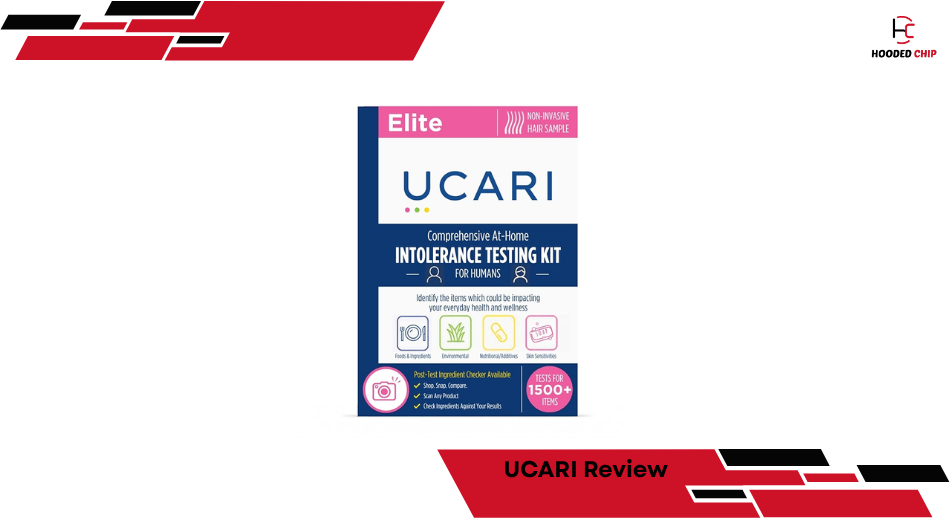
Quick Verdict: UCARI
| Our Assessment | |
|---|---|
| Overall Rating | 6.8/10 |
| Best For | People who understand the limitations and want a broad, exploratory wellness report to help structure a cautious elimination-and-reintroduction process |
| Main Human Test | Human Intolerance Test Kit (Elite) |
| Current Price | $119 for one kit |
| Pros | Easy hair collection, no needles, 1,500+ items screened, fast lab turnaround, digital results, US lab, free US standard shipping |
| Cons | Hair-based intolerance testing lacks established clinical validation, cannot diagnose food allergies, broad results may encourage unnecessary restriction, relatively expensive |
| Short Summary | UCARI offers one of the easiest and broadest at-home intolerance-testing experiences we've reviewed. The problem is not convenience—it's scientific certainty. We would treat its results as hypotheses to investigate, not diagnoses or proof that a particular food is causing symptoms. |
UCARI Review: Convenient Wellness Tool or Reliable Intolerance Test?
Imagine regularly dealing with bloating, headaches, skin irritation or unexplained digestive discomfort. You suspect food.
But which food? Milk? Wheat? Coffee? An additive buried halfway down an ingredient label?
That's exactly the uncertainty services such as UCARI are designed to address. Instead of scheduling an appointment or having blood drawn, UCARI sends you an at-home kit. You register it, collect a hair sample, mail the sample to the company's US laboratory and receive a digital report. The current Elite human test claims to screen more than 1,500 food and non-food items, including foods, additives, preservatives, environmental factors and personal-care ingredients. UCARI says results are posted within two business days after its lab receives the sample. That sounds enormously appealing. There's just one issue and it's significant.
A convenient test and a clinically validated diagnostic test aren't the same thing. Major allergy organizations warn consumers against relying on various unproven food-sensitivity testing methods, and established diagnosis of food allergy relies on medical history combined, where appropriate, with validated skin testing, IgE blood testing and medically supervised oral food challenges. That distinction shapes our entire UCARI review. We're not going to tell you that UCARI can definitively discover which foods your body “can't tolerate,” because the evidence doesn't justify that conclusion.
But that doesn't necessarily make the service useless. Used cautiously, its report may give some people a structured starting point for observing symptoms and discussing concerns with an appropriate professional. That's a much narrower and more defensible—value proposition.
Check Today's Price
What Is UCARI?
UCARI sells at-home intolerance testing for humans and pets. Its main human product is currently the Human Intolerance Test Kit (Elite), while pet owners can purchase a separate Pet Intolerance Test Kit (Elite) for dogs and cats. The appeal is accessibility.
- No needles.
- No blood draw.
- No clinic appointment.
UCARI's process involves registering your unique kit, collecting hair, sending the sample back and viewing the resulting report online. The company's current human product page says samples are processed at its company-owned, US-based laboratory. The human Elite test currently screens more than 1,500 items. UCARI markets the service toward people experiencing concerns such as gastrointestinal discomfort, headaches, skin issues, congestion, fatigue and sleep difficulties. Those symptoms are nonspecific, however. They can have many causes. A report from UCARI therefore shouldn't be treated as evidence that food intolerance is necessarily responsible for them.
UCARI Food Intolerance Test: How Does It Work?
The customer experience is refreshingly simple. You order the kit, register its identifying information, collect the requested hair sample and return it for analysis. Once the sample reaches UCARI's laboratory, the company currently advertises results within two business days. Results are delivered digitally through your account. UCARI also includes personalized insights and what it calls a nutritional reboot program.
From a user-experience perspective, that's appealing. Many consumers don't struggle because they lack information. They struggle because they have too much information and no obvious starting point. UCARI attempts to turn a large report into actionable categories. The bigger question is what those categories actually mean scientifically.
Is UCARI Accurate?
This is the question that matters most.
And the responsible answer is: We wouldn't describe UCARI's hair-based intolerance results as clinically proven diagnostic results.
Food intolerance, food sensitivity and food allergy are frequently treated as interchangeable terms online, but medically they aren't the same. The American Academy of Allergy, Asthma & Immunology explains that food allergy involves an immune response and can potentially be dangerous. Intolerances such as lactose intolerance generally involve problems processing or digesting a food and commonly cause gastrointestinal symptoms. Even some widely marketed blood-based “food sensitivity” tests face substantial scientific criticism.
The AAAAI specifically states that IgG food testing hasn't been scientifically proven to diagnose food sensitivities and notes that IgG may simply reflect normal exposure or tolerance to a food. Professional organizations consequently recommend against using IgG testing to diagnose food allergy or intolerance/sensitivity. UCARI's methodology is different it uses hair rather than an IgG blood panel but that does not establish hair analysis as a validated clinical method for diagnosing food intolerance. That distinction should be front and center in any credible UCARI food intolerance test review.
What UCARI Results Should Mean to You
Suppose UCARI flags dairy.
Don't interpret that as: “I have medically confirmed dairy intolerance.”
A safer interpretation is: “Dairy appeared in this wellness report. Does my actual symptom history support investigating it?”
You could then keep a food-and-symptom diary and discuss an appropriate elimination/reintroduction strategy with a dietitian or clinician. The difference sounds subtle. It isn't. One approach treats an unvalidated screening result as a diagnosis. The other treats it as a hypothesis. We strongly prefer the second.
UCARI Isn't an Allergy Test
This deserves its own section because the consequences of confusion can be serious. UCARI should not be used to determine whether a food is safe for someone with a suspected food allergy. If eating peanuts causes hives and throat tightness, a UCARI report shouldn't determine whether you eat peanuts again. AAAAI explains that appropriate allergy evaluation can include medical history, skin testing and IgE blood testing. In uncertain cases, a medically supervised oral food challenge may be used to confirm or rule out an allergy. Oral food challenges should not be attempted at home when true allergy is suspected. UCARI is therefore best understood as a consumer wellness service, not a replacement for an allergist.
Key Features of UCARI
More Than 1,500 Items in the Elite Test
Breadth is UCARI's most attention-grabbing feature. The current Human Intolerance Test Kit (Elite) screens more than 1,500 items. Those aren't limited to obvious foods. UCARI says its report considers foods, ingredients, additives, preservatives, environmental factors, personal-care ingredients and other nutritional items. That's far broader than simply checking wheat, milk and eggs. The advantage is exploration. The disadvantage is that the more variables you present to someone, the easier it becomes to overinterpret coincidences. A 1,500-item report feels authoritative because it's comprehensive. Comprehensiveness and diagnostic accuracy are not the same thing.
Hair Collection Is Extremely Convenient
No needles may be UCARI's biggest practical selling point. For people uncomfortable with finger-prick testing, conventional blood draws or clinical visits, collecting hair at home is easy. It's also useful logistically for parents and pet owners.
The problem is the same one we've emphasized throughout this review: convenience tells us nothing about clinical validity.
UCARI earns high marks for usability. It earns a much more cautious score for evidence.
Fast Digital Results
UCARI currently states that results are available within two business days after its US laboratory receives the sample. That's genuinely fast. You don't need another appointment to retrieve results, and the digital format makes it easier to save or review your report. For a consumer wellness product, this is exactly how the experience should work.
Nutritional Reboot Guidance
A long list of flagged ingredients isn't particularly useful by itself. UCARI therefore includes personalized insights and a nutritional reboot program with the kit. We like the concept more than indiscriminate long-term food avoidance. If you're going to use UCARI, the useful experiment isn't eliminating 30 foods permanently. It's making cautious, controlled changes and observing whether your symptoms reliably change. Restrictive diets can create nutritional problems, especially when many staple foods are eliminated without professional supervision.
First Impressions
UCARI feels more approachable than traditional medical testing because that's exactly what it was designed to be. The kit arrives as a consumer product rather than clinical equipment. Registration and sample collection are designed to happen at home. There's no phlebotomist, appointment or complicated setup. For anyone intimidated by health testing, that's a meaningful strength.
The digital-results model also makes sense. Rather than mailing a dense laboratory document back to you, UCARI presents its findings in an online account. Our initial expectation would therefore be high for user experience and deliberately lower for diagnostic certainty. Keeping those two dimensions separate prevents most of the misunderstandings surrounding products in this category.
Real-World Use: Where UCARI Can Be Helpful
UCARI becomes most defensible when you stop treating the report as an answer and start treating it as an experiment generator. Imagine you've experienced mild digestive discomfort for months. Your UCARI results flag several foods. Instead of eliminating everything simultaneously, you could identify one plausible candidate that appears frequently in your diet, track symptoms, discuss the situation with a dietitian, remove it for an appropriate period and then consider structured reintroduction.
If nothing changes, that's useful information. If symptoms repeatedly disappear and return alongside a specific food, that's also useful information—and potentially a reason for more appropriate clinical investigation. What you shouldn't do is assume that every red or elevated result represents a biological problem.
The Elimination-Diet Problem
Eliminating too many foods at once creates another issue. Suppose you remove dairy, wheat, eggs, tomatoes, soy, almonds and coffee simultaneously and feel better.
Which food caused the problem?
You don't know. Perhaps none did. Maybe your overall diet changed in another meaningful way. This is why elimination and reintroduction need structure. It's also why consumers with persistent symptoms benefit from professional guidance rather than continuously narrowing their diet based on screening reports.
UCARI Pricing & Value
The current Human Intolerance Test Kit (Elite) costs $119 for one kit. UCARI currently offers quantity discounts:
| Package | Current Price |
|---|---|
| 1 Human Elite Kit | $119 each |
| 2 Kits | $107.10 each – 10% off |
| 3 Kits | $95.20 each – 20% off |
Free standard US shipping is currently included. The Pet Intolerance Test Kit (Elite) was listed at $89.99, reduced from $99.99, during our review.
Is UCARI Worth $119?
That depends almost entirely on expectations. If you're paying $119 because you believe the report will definitively diagnose the cause of chronic symptoms, we don't think the evidence supports that purchase rationale. If you're paying for a broad wellness report that you knowingly intend to use as a starting point for further investigation, the proposition becomes more reasonable. The service is convenient. The report is broad. Turnaround is fast. And the cost is predictable. But we'd rather see consumers spend money on clinically appropriate evaluation when symptoms are significant, persistent or suggestive of a genuine allergy.
Explore BRAND Collections
UCARI Pros & Cons
| Pros | Cons |
|---|---|
| Extremely easy at-home collection | Hair-based intolerance testing isn't established as a clinical diagnostic standard |
| No blood or needles | Cannot diagnose food allergies |
| Tests 1,500+ items | Results can be overinterpreted |
| Broad food and non-food screening | Could encourage unnecessary dietary restriction |
| Fast advertised lab turnaround | $119 is substantial for an exploratory wellness test |
| Digital results | Symptoms attributed to intolerance can have other causes |
| US-based company laboratory | Broad screening doesn't equal clinical accuracy |
| Free standard US shipping | Medical follow-up may still be needed |
| Pet testing available | Pet hair-test results have similar interpretation concerns |
| Quantity discounts | Not suitable for determining whether an allergen is safe |
Who Should Buy UCARI?
UCARI makes the most sense for curious, health-conscious consumers who understand from the beginning that they're purchasing an exploratory wellness test rather than a medical diagnosis. It may be useful if you have mild, nonspecific symptoms, have already considered obvious lifestyle factors and want ideas for a structured food-and-symptom investigation. It's also appealing to people who strongly prefer non-invasive sample collection. The critical requirement is restraint. Don't remove nutritionally important foods indefinitely just because they appear on a report.
| Situation | Recommendation |
|---|---|
| Wants broad wellness insights | Potentially useful |
| Wants needle-free testing | Excellent convenience |
| Wants ideas for elimination diet | Useful with professional guidance |
| Suspected severe food allergy | No — see an allergist |
| Wants definitive diagnosis | Not recommended |
| Child with significant symptoms | Seek professional evaluation first |
| Persistent GI symptoms | Medical/dietitian evaluation preferred |
| Curious pet owner | Potential exploratory tool; involve your vet |
Who Should Avoid UCARI?
Anyone with symptoms suggesting a true food allergy should skip consumer intolerance testing as their primary evaluation. That includes rapid reactions involving hives, swelling, wheezing, throat tightness or breathing difficulty. AAAAI emphasizes that proper diagnosis of food allergy is important and that validated medical approaches may include skin testing, IgE testing and supervised food challenges. We'd also avoid UCARI if you're likely to become anxious about long lists of flagged foods. A broad report can make eating feel more complicated rather than less. People with a history of restrictive eating should be particularly cautious about any product that could encourage additional food avoidance.
UCARI Pet Intolerance Test Review
UCARI's pet test applies a similar convenience-first concept to dogs and cats. The current Elite pet kit costs $89.99 and is marketed for concerns such as scratching, digestive issues, paw biting, lethargy and hot spots. The customer appeal is obvious. A dog can't tell you that a particular ingredient makes it uncomfortable. Pet owners naturally want clues. But this category deserves the same scientific caution.
What Do Pet Owners Say?
Independent Chewy feedback is interesting because it shows both sides of the experience. The Elite UCARI pet test currently has a 4.3/5 rating from 29 ratings on Chewy. Some owners reported that eliminating foods identified by the test coincided with reduced itching or other improvements. Other experiences were dramatically different. One August 2026 reviewer said the test reported no sensitivities despite the owner believing several proteins had already been identified through elimination dieting. Another reviewer said their veterinarian described hair tests as unreliable and subsequently pursued blood allergy testing.
A different UCARI pet product listing has only a handful of ratings and includes complaints about seemingly irrelevant foods appearing in reports.
That mixed pattern reinforces our core conclusion: Don't make major veterinary or dietary decisions solely from a UCARI hair report. If your pet has persistent itching, recurrent ear problems, gastrointestinal symptoms or skin disease, involve your veterinarian.
UCARI Reviews: What Customer Feedback Tells Us
Customer anecdotes are useful for evaluating things such as ease of use, turnaround and report readability. They're much less useful for proving diagnostic accuracy. If someone eliminates a UCARI-flagged food and feels better, several explanations remain possible. The food might genuinely have been contributing. Another dietary change might be responsible. Symptoms may naturally fluctuate. Expectation/placebo effects may play a role. That's why testimonials can't substitute for controlled validation.
The pet feedback on Chewy demonstrates this nicely: some owners describe major improvements after changing foods, while others say the results didn't match previously observed reactions.
We wouldn't dismiss either group. We simply wouldn't use anecdotes to prove that the underlying testing methodology accurately diagnoses intolerance.
UCARI vs Everlywell vs Clinical Allergy Testing
The biggest mistake is assuming all “food tests” answer the same question.
They don't.
| Feature | UCARI | IgG-Based Home Tests | Clinical Allergy Evaluation |
|---|---|---|---|
| Sample | Hair | Usually blood/finger prick | History + skin/blood; sometimes food challenge |
| At Home | Yes | Usually | Partly/no |
| Broad Screening | 1,500+ items | Often dozens/hundreds | Targeted to clinical history |
| Needle-Free | Yes | Usually no | Not always |
| Diagnoses Food Allergy | No | No | Can evaluate/diagnose appropriately |
| Scientific Acceptance for Food Sensitivity | Limited | Major allergy groups recommend against IgG use | Established diagnostic framework |
| Convenience | Excellent | Excellent | Lower |
| Best Use | Exploratory wellness report | We are cautious | Suspected allergy/medical symptoms |
AAAAI specifically warns that IgG food panels are unproven for diagnosing food sensitivities and recommends professional evaluation when food reactions are suspected. UCARI doesn't use that same IgG methodology, but hair analysis similarly shouldn't be elevated to the status of established allergy diagnostics without adequate validation.
UCARI's Actual Competitive Advantage
It's convenience. That's the honest answer. UCARI doesn't require blood. It screens an unusually large number of items. The process happens at home. The report arrives quickly. Those are meaningful consumer benefits. Its weakness is that the thing buyers care about most—“Is this definitely what's causing my symptoms?”—is precisely where we have the least reason for certainty.
Does UCARI Really Work?
It depends on what “work” means.
Does UCARI accept a hair sample, process it and provide an organized report covering a very large number of items? Yes.
Can some consumers use that report to generate ideas for dietary experimentation? Yes.
Do customer anecdotes exist where people report improvement after following results? Yes.
Does that establish UCARI as a clinically validated way to diagnose food intolerance? No.
Those four statements can all be true simultaneously. That's why our score isn't a 2/10 or a 9/10. UCARI has a legitimate consumer product with excellent convenience and an interesting wellness use case. It just needs to be purchased with realistic expectations.
Frequently Asked Questions
Is UCARI legit?
Yes. UCARI is a real company offering at-home human and pet intolerance testing through a company-owned US laboratory. The question isn't whether the service exists; it's how much diagnostic confidence consumers should place in hair-based intolerance results.
Does UCARI really work?
UCARI provides an extensive wellness report from a submitted hair sample, but we wouldn't treat its findings as clinically proven diagnoses of food intolerance. Its best use is as exploratory information that may guide further investigation.
Is UCARI accurate?
There isn't sufficient established clinical evidence for us to describe hair-based food intolerance testing as a medically validated diagnostic method. UCARI results should therefore be interpreted cautiously rather than treated as definitive proof.
How does the UCARI food intolerance test work?
You register the kit, collect a hair sample, return it to UCARI and receive digital results. The current Elite human kit screens more than 1,500 food and non-food items, with UCARI advertising results within two business days after its laboratory receives the sample.
Does UCARI test for food allergies?
No. A food intolerance test should not be used to diagnose or rule out food allergy. Appropriate allergy evaluation can involve clinical history, skin testing, IgE blood testing and, when appropriate, medically supervised oral food challenges.
How much does UCARI cost?
As of September 2026, UCARI's Human Intolerance Test Kit (Elite) costs $119 for one kit. Two kits are currently discounted 10% to $107.10 each and three kits 20% to $95.20 each.
How long do UCARI results take?
UCARI currently says results are delivered within two business days after the sample reaches its US laboratory. Shipping time to the laboratory is additional.
How many items does UCARI test?
The current Human Intolerance Test Kit (Elite) screens more than 1,500 items, including foods and various non-food factors.
Is the UCARI pet intolerance test accurate?
We would interpret pet hair-testing results cautiously. Independent Chewy reviews include both owners reporting improvements after dietary changes and owners saying results conflicted with previously observed food reactions. Persistent symptoms should be evaluated with a veterinarian.
Is UCARI better than an IgG food sensitivity test?
They're based on different approaches, so this isn't a straightforward comparison. Major allergy organizations explicitly recommend against using IgG food testing to diagnose food sensitivity. Hair-based intolerance testing also lacks the evidence required for us to regard it as a definitive clinical diagnostic method.
What should I do if UCARI flags a food?
Don't automatically remove every flagged food indefinitely. Consider whether the result fits your actual symptom history and discuss a structured elimination-and-reintroduction strategy with an appropriate clinician or registered dietitian, particularly if multiple major food groups are involved.
Should I buy UCARI if I think I have a food allergy?
No—not as a replacement for medical evaluation. Food allergies can cause serious reactions. An allergist can determine which diagnostic approach is appropriate based on your symptoms and history.
Final Verdict: Is UCARI Worth It?
UCARI solves one part of the food-sensitivity problem exceptionally well: Convenience.
Its current Elite test requires only a hair sample, screens more than 1,500 items and promises digital results within two business days of the sample reaching its US laboratory. That's an appealing experience. It's also considerably easier than arranging appointments, blood draws and repeated consultations. But convenience isn't the same thing as clinical validity. And that distinction prevents us from giving UCARI an enthusiastic recommendation.
The scientific problem is bigger than this individual company. The consumer food-sensitivity-testing industry frequently offers simple answers to symptoms that can be medically complex. Even IgG blood panels—which sound far more conventional than hair analysis—are specifically rejected by major allergy organizations for diagnosing food sensitivities. So we'd never look at a UCARI result saying “high intolerance” and conclude that the food has been proven to cause a problem. Instead, think of the report as a list of hypotheses.
Some may be worth exploring. Some may be irrelevant. And the only useful outcome is what survives a sensible process of symptom tracking, appropriate elimination/reintroduction and professional evaluation where needed. For someone who understands those limitations, UCARI can still be interesting. For someone seeking a definitive diagnosis, we'd put that $119 toward appropriate healthcare instead.
Shop BRAND Now
Can I write you?
Sign up to get my weekly newsletter.
Trending Stories